 By Bobby McLaughlin, Owner of Four Elements Electric
As a Master Electrician and the owner of Four Elements Electric, I’ve learned that running a business is about much more than the work we perform every day. It’s about building something that provides opportunities for employees, serves customers well, and strengthens the community around us.
That’s one of the reasons I’m so passionate about work-based learning.
Before starting Four Elements Electric, I spent years working for different companies. Along the way, I saw a lot of great things, but I also saw how easily the people doing the work, including electricians, apprentices, technicians and other skilled professionals, could become an afterthought.
When I started Four Elements Electric, I wanted to build something different. Developing people wouldn’t simply be something we talked about; it would be part of our business model.
Because when it comes to the skilled trades, employers can’t simply hire their way out of a workforce shortage. We have to build the workforce we need.
 Creating Pathways, Not Just Jobs
Building that workforce starts with giving people an opportunity to get their foot in the door.
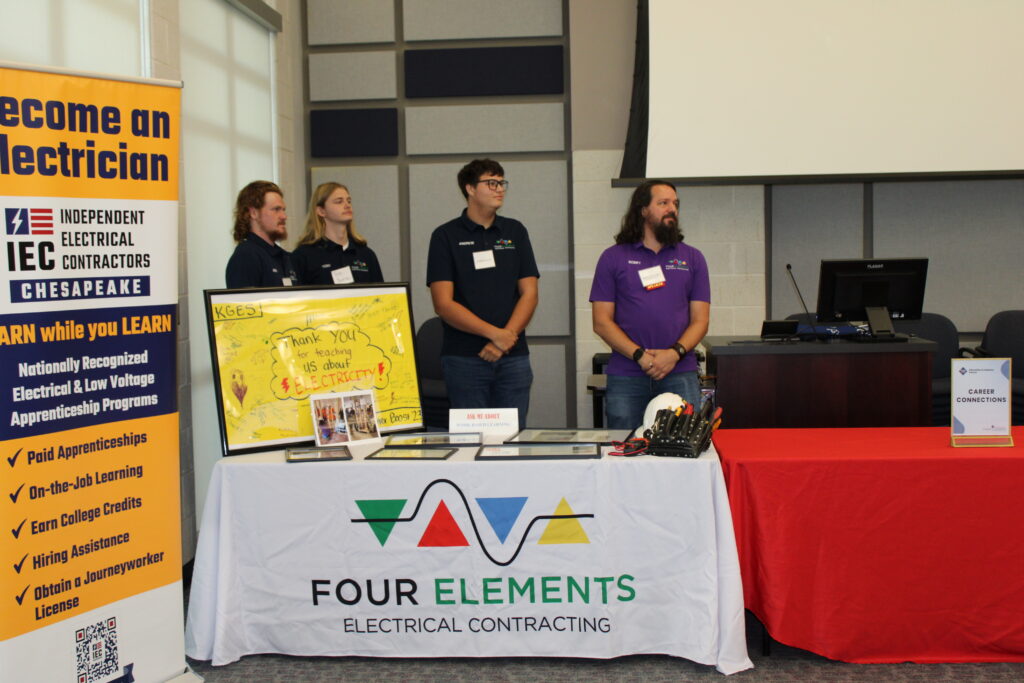
At Four Elements Electric, we’ve worked to create opportunities for young people interested in the trades. We support trade and career programs in our local schools and make a point of hiring high school graduates who are ready to begin careers as apprentices.
But we aren’t just offering someone a job. We’re giving them a pathway.
A young person can enter the electrical industry without knowing exactly where their career will take them. Over time, they can develop valuable skills, earn licenses, become a journeyman or master electrician, move into leadership as a foreman, or even become a business owner themselves.
That’s a career.
For a long time, we’ve done a good job of telling young people that one path to success is going to college. College can absolutely be the right choice for many students, but it isn’t the only path.
There is tremendous opportunity in the skilled trades, and our communities need these professionals. We need electricians, plumbers, HVAC technicians, welders, mechanics, carpenters, equipment operators and countless other skilled workers who keep our businesses and communities running.
If we’re serious about having the workforce our region will need 10 or 20 years from now, we have to start introducing young people to those careers today.
The Power of Work-Based Learning
There is a big difference between telling a student about a career and allowing them to experience it.
When students step into a real workplace, work alongside professionals, see what a job actually looks like and understand the skills it requires, their perspective can change.
They begin asking themselves important questions:
Could I do this? Could I be good at this? Could this actually be a career for me?
Sometimes, that experience is all it takes to change the direction of someone’s life.
Internships, apprenticeships, job shadowing and other work-based learning opportunities allow students to explore careers while also helping employers develop stronger talent pipelines.
But making those opportunities available requires employers to participate.
Workforce Development Is Our Responsibility, Too
As employers, we have to stop looking at workforce development as somebody else’s responsibility.
It isn’t solely the responsibility of our schools, workforce development organizations or government agencies. Employers have a role to play, too.
If we want better employees, we have to be willing to help develop them.
That means partnering with schools. It means opening our doors to students. It means creating internships, apprenticeships, job-shadowing opportunities and other ways for young people to experience our industries firsthand.
And yes, it takes work.
An apprentice isn’t going to walk through the door knowing everything. They’re going to make mistakes. Employers have to teach them, mentor them and invest time in their development.
There may even be days when hiring someone who already has years of experience sounds much easier.
But if every employer takes that approach, where will tomorrow’s experienced workers come from?
Someone has to give them their start.
At Four Elements Electric, we’re working to be one of those companies.
I don’t just want to build a successful electrical contracting business. I want to build a company that creates opportunities for people. I want the young person who begins with us as an apprentice to look back years from now and say, “That company gave me my start.”
And I want our community to benefit from that investment.
Building a Stronger Regional Workforce Together
I don’t approach workforce development as an expert. I approach it as an employer who has experienced the challenges of finding good people, developing good people and keeping good people.
From that experience, I believe the solution isn’t simply finding more workers.
It’s building better pathways into the workforce.
When employers, educators, workforce organizations and community leaders work together, we can give more young people opportunities to discover what they’re capable of and introduce them to careers they may never have considered.
When we do that, we’re not just filling jobs.
We’re building careers. We’re building businesses. We’re building families. And ultimately, we’re building a stronger community.
That’s something worth investing in.
Bobby McLaughlin, owner of Four Elements Electric, shared these insights as part of the Fredericksburg Regional Chamber of Commerce’s Workforce NOW: Education & Industry Forum, which brings together business, education and workforce leaders to strengthen the region’s talent pipeline and prepare the next generation for meaningful careers.