
By: Rob Marcus, Blue Stallion Solutions
I sat in the room where my daughter, Aryssa, passed away. She was fo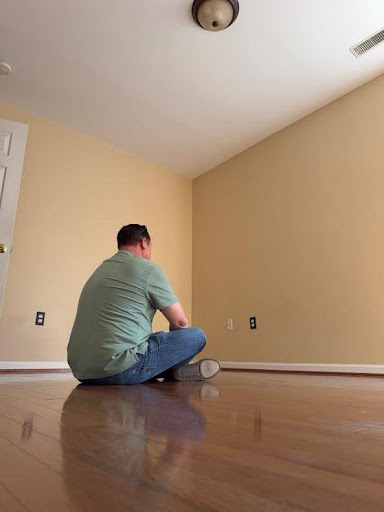 urteen. A few days ago, I posted some thoughts from that space because I wanted to spark a conversation about life and leadership. I wanted to challenge people to think deeper. My fear is that many only saw the grief. Grief is a heavy lens. It blurs everything else. But at this stage of my life, I know that the most important questions don’t show up on a schedule. You have to sit with a memory. You have to wait in a place until it tells you something you weren’t ready to hear.
What came back to me that afternoon wasn’t just grief. It was a pattern I see everywhere, in corporations, in small teams, in families, and across our culture. Most people want to be understood. I understand that. I feel it too. We want people to see what we have carried. We want the context of our struggles to be acknowledged. Context matters. Compassion matters. The problem is what we have done with that understanding, because we have started confusing understanding with obligation.
We should try to understand each other. There is no debate there. But understanding is not an obligation to react, accommodate, or lead the way you desire. A subtle shift has occurred. We moved from wanting people to see our struggles to believing they should adjust their expectations because of them. We moved from seeking compassion to expecting exemption. Many don’t notice it happening. Once it does, everything changes. Pain is real. Trauma is real. If you’ve lived, you know this. The question is not whether hardship affects us. It does. The question is what we do with that reality once it is acknowledged.
I spent years in uniform, and I have led in environments where consequences were measured in lives, not hurt feelings. I know this: standards are not the enemy. Accountability is not cruelty. Expectations are not oppression. The deepest respect you can show another human being is to understand what they carry and still believe they are capable of meeting the moment. That is not a lack of compassion. It is one of the clearest forms of it.
Aryssa spent her life overcoming obstacles most people will never face. She was special needs: nonverbal, physically unstable, with the mentality of a five-year-old at age fifteen. She couldn’t articulate leadership frameworks, and she didn’t understand the nuance of corporate accountability, but watching her live taught me more about those concepts than any seminar ever could. We fought for her. We navigated systems that weren’t built for her. We demanded access and fairness. We wanted people to see her potential, not just her challenges. What we never fought for was the elimination of standards. We didn’t want the bar lowered for her. We wanted the path to the bar made accessible. There is a massive difference between the two. Making success accessible creates opportunity. Lowering expectations removes it. One says, “We believe you are capable, so we will remove the unnecessary barriers.” The other says, “We’ve decided the standard no longer applies to you.” Watching Aryssa live her life, I realized that she thrived because we didn’t treat her as fragile. We acknowledged her reality, but we believed in her capacity. Fairness is not the absence of expectations. It is the opportunity to pursue them.
Accountability is not the opposite of compassion. It is one of its highest forms, because when you believe someone is capable, you hold them to a standard instead of removing responsibility from their lives or quietly deciding they are too wounded or too disadvantaged to carry it. Today, much of what is called “empathy” is actually avoidance. Leaders are afraid to tell the truth because they don’t want to seem insensitive. Managers tolerate behavior that destroys teams because confronting it is uncomfortable. People want context when they fall short. They want certainty when someone else does. They want patience for their intentions and consequences for everyone else’s impact. This is where the Leadership Challenges become visible. I see it in the Skills Challenge: leaders who won’t delegate because they are afraid to hold people accountable for the results. I see it in the Relationship Challenge: people who can’t move from peer to boss because they think “being a friend” means “lowering the bar.” I see it in the Responsibility Challenge: teams where no one owns anything because everyone has an excuse. What if understanding is supposed to deepen accountability rather than erase it? What if being seen more clearly is a call to carry responsibility more honestly?
Harvard Business Review describes “Both/And Leadership” as the ability to hold competing truths at the same time: compassion and accountability, empathy and responsibility, understanding and standards. Strong leaders don’t choose one. They carry the tension of both. In my book, Crossing the Divide, I talk about the gap between where a team is and where they need to be. You don’t close that gap by ignoring the reality of people’s pain. But you also don’t close it by letting the pain become the new destination. You can support someone through a crisis without lowering the expectation of their role. You can care deeply while still holding the line, because dignity means treating people as though their lives carry agency and believing they have meaning and responsibility even when the path is harder than most realize. That’s the tension. That’s the challenge. And that’s the responsibility.
There are parts of my life that explain a great deal about me. My intensity, my commitment to excellence, and my impatience come from somewhere. Grief shows up in conversations that have nothing to do with loss. Memories still stop me in my tracks.
Explanation and excuse are not the same thing.
Sitting in that room reminded me of that. If anyone has a reason to say, “You don’t understand what I’ve been through,” I do. Many people don’t understand. But if I use that truth as a permanent exemption from responsibility, I am not honoring my daughter. I am hiding. I am using my pain to avoid the hard work of governing myself. The moment we treat pain as a waiver, everything drifts. Trust becomes unstable. Resentment grows. Teams become uneven. Leaders stop leading and start managing emotional weather systems. Real compassion has a spine. It tells the truth. It responds with dignity without pretending actions don’t have consequences. My pain gives me context. It explains my reactions and my intensity. But context is not permission. It does not excuse me when I fail my team. It does not exempt me from honesty or responsibility. My daughter’s life taught me this: life isn’t fair, and pain is real. But standards matter. My pain explains me. It does not excuse me. Neither does yours. Stop managing the drift. Start leading with the spine of compassion.
Build a leadership team people actually want to show up for. Contact Blue Stallion Leadership today.