
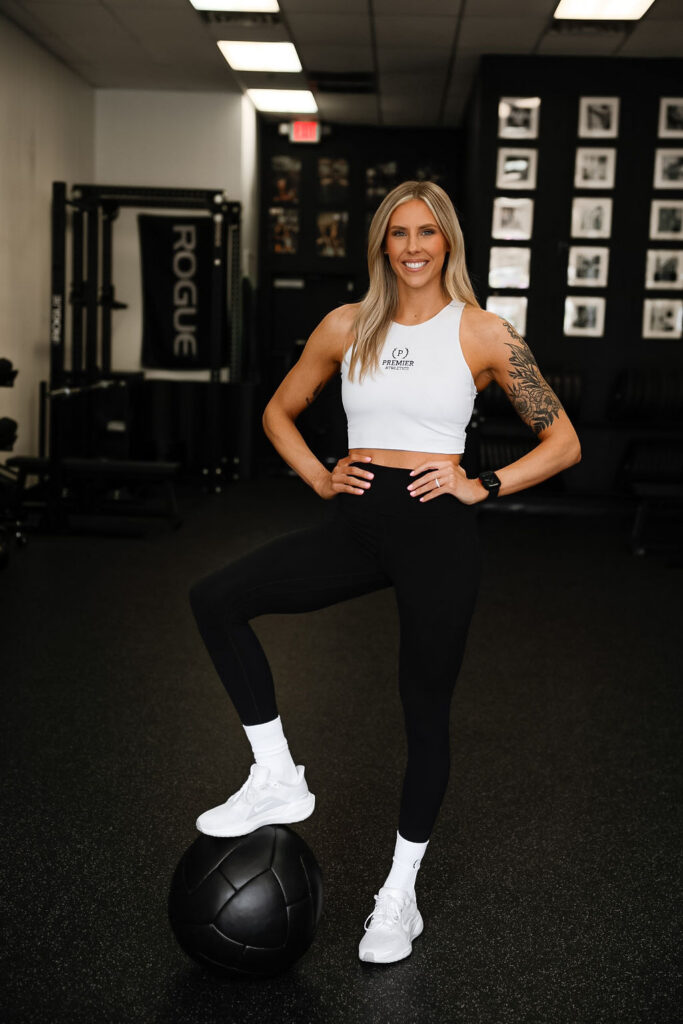
 By Courtney Dorsey, Owner & Head Trainer, Premier Athletics
In today’s fast-paced world, we’ve grown accustomed to expecting quick results. We can order groceries in minutes, stream any show instantly, and access information with the click of a button. Naturally, many people begin their fitness journey with that same expectation: “How fast can I see results?”
As a fitness professional, I understand the desire for change. Most people don’t walk into a gym unless they’re ready for something different, whether that’s feeling stronger, improving their health, or gaining confidence in their body. One of the most important conversations I have with clients early on is this:
Real results don’t come from extreme effort over a short period of time. They come from consistent effort over a long period of time.
That starts with setting realistic goals.
The Problem with Unrealistic Expectations
Many people begin their fitness journey with goals that sound something like:
- “I want to lose 20 pounds in a ”
- “I just need to get toned ”
- “I’ll go all in for 6 weeks and then maintain ”
While the motivation behind these goals is understandable, the structure is flawed. These expectations are often shaped by social media, marketing, and what we commonly refer to as diet culture, the idea that results should be fast, dramatic, and achieved through restrictive or extreme methods.
The problem is, those methods are rarely sustainable.
When someone tries to overhaul their entire lifestyle overnight, cutting calories drastically, doing high-intensity workouts daily, eliminating entire food groups, it often leads to burnout. Not because they lack discipline, but because the plan itself isn’t realistic or sustainable.
What Realistic Goals Actually Look Like
Realistic goals are not flashy. They’re not extreme and they don’t rely on perfection. Instead, they look like:
- Committing to strength training 3–4 times per week consistently, with a No random workouts.
- Prioritizing protein and balanced meals instead of “cutting everything out”
- Getting stronger over time, not just Body recomposition, not just the number on the scale.
- Improving energy, sleep, and daily The basics!
- Tracking progress over months, not days!
At first glance, these goals may not seem as exciting. But they are powerful, because they are sustainable. Sustainability is what leads to long-term change.
Breaking Big Goals into Smaller Wins
One of the most effective strategies I use with clients is breaking large goals into smaller, attainable steps.
For example, instead of focusing solely on “losing 30 pounds,” we shift the focus to:
- Showing up to scheduled workouts each week
- Hitting daily macro targets
- Progressive overload
- Staying consistent with habits for 4–6 weeks at a time
Each of these smaller goals is measurable and achievable. More importantly, they build confidence.
When someone starts seeing themselves follow through, week after week, they begin to trust the process. That trust is what keeps them going.
Because the truth is, success in fitness is not about one big transformation moment. It’s about hundreds of small decisions done consistently over time.
Debunking Diet Culture
Diet culture has created a narrative that in order to see results, you need:
- Specialized supplements or “fat burners”
- Expensive or restrictive foods
- Excessive cardio or workouts that leave you completely exhausted
- A constant state of hunger or deprivation
Let me be clear: none of that is required for real, sustainable results.
Your body does not need extremes. It needs consistency.
You do not need to earn your results through suffering. You need to support your body through structured, intentional habits.
At Premier Athletics, we focus on evidence-based training and nutrition. That means:
- Prioritizing progressive overload in strength training
- Supporting muscle development to improve body composition
- Educating clients on balanced nutrition, not restriction
- Using data (like body composition and performance) to guide progress
This approach may not be as flashy as a “30-day transformation,” but it works AND it lasts.
Consistency Over Perfection
Another barrier many people face is the belief that they need to be perfect in order to succeed. They think:
- “If I miss a workout, I’ve ”
- “If my nutrition isn’t perfect, what’s the point?”
- “I’ll start again when I can do everything ”
This all-or-nothing mindset is one of the biggest obstacles to long-term success. Consistency does not mean perfection.
It means:
- Showing up even when it’s not ideal
- Making the best choice available in the moment
- Getting back on track quickly after setbacks
Life will always have variables, and we will always have busy schedules, travel, stress, family responsibilities. The goal is not to eliminate those variables, but to learn how to navigate them while still moving forward.
A Better Approach to Fitness
If you’re someone who has struggled with starting and stopping, or feeling like nothing “sticks,” it may not be a lack of effort.
It may simply be that the approach hasn’t been realistic. A better approach looks like:
- Setting clear, attainable goals
- Following a structured training program
- Focusing on strength and performance, not just aesthetics
- Fueling your body with balanced nutrition
- Staying consistent, even when motivation fluctuates
This approach removes the guesswork. It replaces extremes with structure. It allows you to build a lifestyle, not just chase a short-term outcome.
Final Thoughts
Fitness should not feel like punishment. It should not require you to completely overhaul your life overnight. And it certainly should not rely on quick fixes or unrealistic expectations.
It should be something that supports you, physically, mentally, and emotionally.
When you focus on realistic goals, break them down into manageable steps, and commit to consistency over time, you create something far more valuable than a temporary transformation.
You create lasting change.
That is what truly sets people apart, not how fast they start, but how consistently they continue.