
 An alarming number of mares (female equines) find themselves in animal welfare centers after a spiral of bad experiences due to human-equine miscommunication and a lack of leadership. We find mares are slower to trust than their male counterparts and more likely to take dominant roles in the absence of a human leader, often leading to them becoming mislabeled as a “problem”.
Thanks to a generous gift from the Maya Auchincloss Trust, Rapidan Equine Sanctuary created the “Maya’s Mares” program to address this situation directly. Embodying RES’s values of integrity, courage, compassion, education, and fun, this program takes a deliberate approach to understanding mares and developing best practices for humans to earn respect, then willingness, then trust as a herd leader.
The following provides an overview of our philosophy when working with equines, as taught by the mares who challenged us to be better.
Of all the animals with whom humans interact, equines are the least like us, yet we ask the most of them.
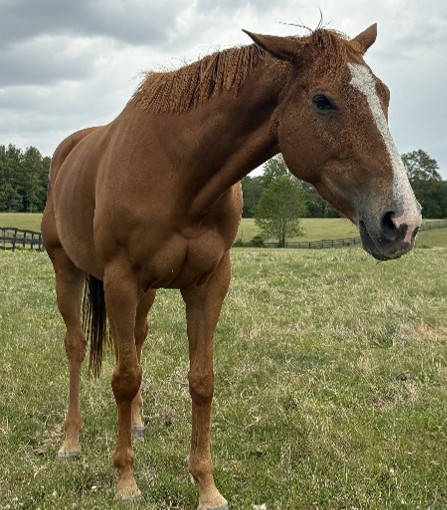
Pictured above is Miraya before: her pinned ears signaling anger, fear and defensiveness.
Imagine the trust it takes a prey animal
to allow a predator to sit on its back.
Building trust in you is essential to interacting with equines. In your own human experiences, you’ll recall the frustration of a leaderless group versus one with a humble, patient, self-aware leader who gives clear guidance and direction with confidence.
The desire for a leader is observed most strongly in mares, as compared to geldings who lose some of their natural hormones at castration. This urge for a leader is so intense that a mare will reluctantly step into the role if no one (equine or human) comes forward.
We humans are so different from equines. Humility requires not just understanding, but acting on a belief that “the human way” isn’t always best. Staying humble keeps you open to an equine’s signals, to learn from them, and to always see them both as prey animals and as having individual personalities.
The minute we lose patience we lose the ability to lead. Your frustration and reactivity undermine a mare’s confidence that you’ll keep her safe from the lions, uphold the social order, lead her to good pasture and water, and otherwise make decisions that ensure the herd will persevere…a role she’d likely take in a wild herd.
Being a flight animal, equines are aware of every move we make around them – it is their nature for survival. They are constantly scanning for signals of who’s a threat, who’s safe, and who’s in charge. Maintaining consistent self-awareness, including our state of tension or relaxation, what our feet are doing, where we’re looking, and the clarity and confidence of our communication is key to effectively leading.
At RES, we strive to improve ourselves in these three areas with our residents (especially our mares) every day. Becoming better leaders improves our relationships with the equines, which in turn leads to healthier, happier equines.
We invite you to carry this philosophy into your own interactions with equines – at RES or wherever you encounter them – and discover how becoming better for an equine can make life better for both of you.
Pictured below is Miraya after: her dropping ears signaling she is relaxed, resting and feeling at ease.
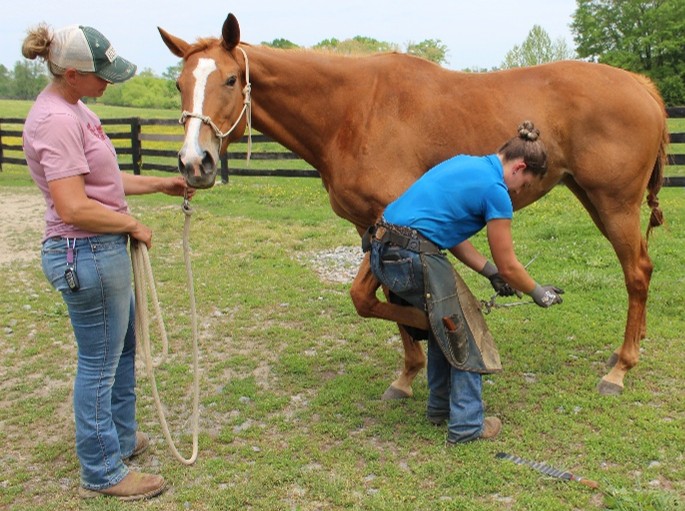
Rapidan Equine Sanctuary is a registered 501(c)(3), providing sanctuary to neglected equines while embracing the bond they share with humans. We are committed to compassionate care, responsible stewardship, and building meaningful connections between all equines (horses, donkeys, mules, and ponies), people, communities, and the land. We envision a world where every equine is valued and respected, and where their human partners grow in confidence and ability. By strengthening trust between equines, humans, and communities, we strive for a future where no equine suffers neglect, and all can experience the transformative power of equine stewardship.