
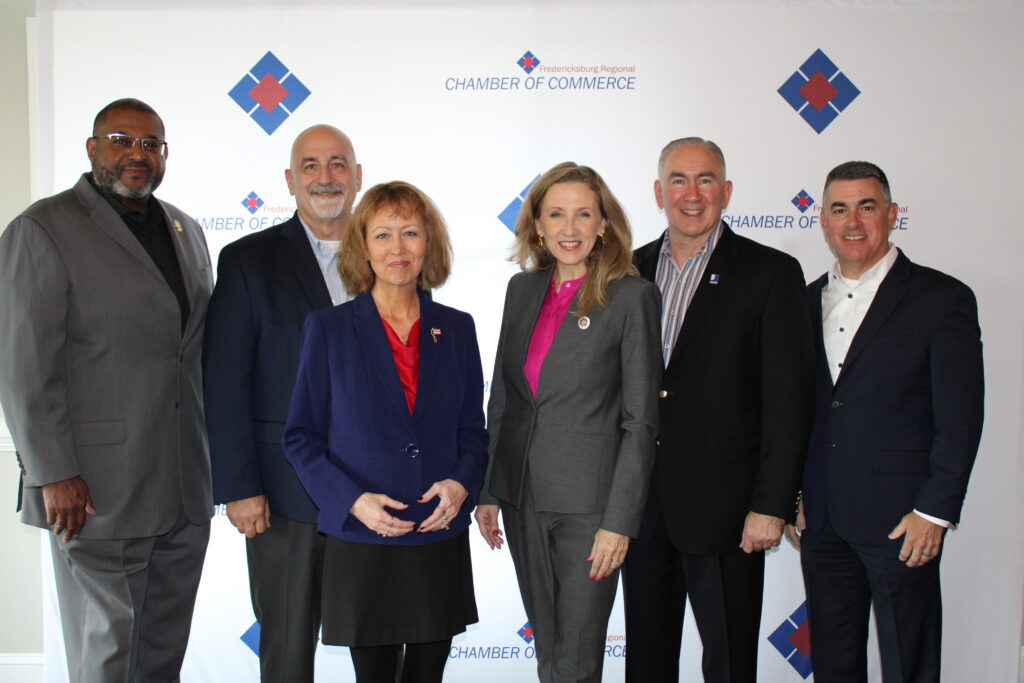
 Regionalism Matters: Veterans & Business
What makes a veteran choose to build a career in the Fredericksburg region? What encourages them to stay? And how can businesses better recognize the experience and leadership veterans bring to the workforce?
These were among the questions explored during the Fredericksburg Regional Chamber of Commerce’s Regionalism Matters: Veterans & Business event on November 12.
Held in partnership with the Fredericksburg Regional Military Affairs Council (MAC), the event brought together business leaders, veterans, and community partners to discuss the economic impact of our military community and the opportunities to strengthen the connection between military service and civilian careers.
The conversation highlighted a shared responsibility: creating a region where veterans and military families can build meaningful careers, businesses can access skilled talent, and our communities can continue to grow.
Virginia’s Military Presence Is an Advantage Worth Protecting
Keynote speaker State Senator Tara Durant opened the discussion by emphasizing the importance of Virginia’s military presence and the increasingly competitive environment surrounding defense investment, military missions, and workforce development.
While Virginia benefits from its proximity to Washington, D.C., established military installations, and a strong defense contracting community, those advantages alone do not guarantee future investment.
Other states are actively competing to attract and retain military missions, defense contracts, and the businesses that support them.
Senator Durant discussed the importance of collaboration among state leaders, local governments, businesses, and educational institutions to ensure Virginia remains competitive.
A central part of that effort is workforce readiness.
For companies considering expansion into the region, the availability of qualified employees matters just as much as infrastructure, transportation, and business incentives. Employers need confidence that they can recruit, train, and retain skilled workers not only today but five or ten years into the future.
Senator Durant also emphasized the importance of connecting educational opportunities at institutions such as Germanna Community College and the University of Mary Washington with the actual workforce needs of regional employers.
Her remarks reinforced that workforce development is not simply about creating programs. It is about making sure those programs produce meaningful results for businesses, students, and the region.
Why Veterans Stay and Why They Leave
Following the keynote, Joe Caliri, President and CEO of SimVentions and Chairman of the Fredericksburg Regional Military Affairs Council, moderated a panel discussion featuring:
- Dale Sisson, representing the Fredericksburg Regional Military Affairs Council
- Leonard Kenon, representing the Fawn Lake Veterans Group
- Steve Cox, President and CEO of Rappahannock Goodwill Industries
The panel opened with a question that directly affects the region’s economic future: What makes transitioning service members choose to stay in the Fredericksburg area?
Panelists identified several factors, including employment opportunities, affordability, healthcare access, quality of life, and the ability to continue meaningful work.
Cox shared his own experience choosing to settle in the Fredericksburg region after military service. Two factors influenced his decision: familiarity and opportunity.
Having previously spent time in the area, he recognized its quality of life and the potential to build a career and raise a family.
But as the panel emphasized, familiarity alone is not enough.
To attract and retain veterans, the region must offer competitive employment opportunities, clear pathways for professional growth, and a community where military families can see a future for themselves.
Bridging the Gap Between Military Experience and Civilian Employment
One of the most compelling discussions focused on the disconnect between military experience and civilian job requirements.
Veterans often leave military service with years of experience in leadership, communications, operations, technology, and critical decision-making. However, translating those experiences into language that civilian employers recognize can be challenging.
Cox described this as a translation gap.
He explained that military job titles and responsibilities may not immediately communicate the broader skills a service member has developed.
The panel emphasized that veterans must learn to articulate how their experience applies to civilian roles, while employers can benefit from looking beyond military titles to recognize transferable skills.
But the discussion also identified a larger challenge: connectivity.
Veterans seeking employment and businesses looking to hire veteran talent do not always have a clear, coordinated pathway to find one another.
Cox suggested an opportunity for regional organizations to work together by combining the Chamber’s business relationships, Rappahannock Goodwill’s workforce development resources, and the Military Affairs Council’s connections to military installations.
Rather than operating independently, these organizations could help create stronger connections between transitioning service members and regional employers.
It was a practical example of regionalism in action.
Hiring Veterans Is Only the Beginning
The panel also explored what happens after a veteran is hired.
While recruitment is important, long-term retention depends on workplace culture, professional development, mentorship, and meaningful work.
Kenon emphasized the importance of continued training and opportunities for advancement. Employees who understand how their work contributes to an organization’s mission are more likely to feel invested in its success.
Sisson highlighted the value of educational partnerships and professional credentials that allow veterans to build upon their military experience and develop new skills.
Cox focused on workplace culture, particularly the importance of creating an environment where employees feel comfortable sharing ideas, raising concerns, and contributing their perspectives.
Mentorship was another recurring theme.
For employers, the takeaway was clear: supporting veteran employees requires more than offering a position. It means providing opportunities to grow, contribute, and build a lasting career.
Military Spouses Are an Important Part of the Workforce Conversation
The discussion extended beyond veterans to recognize the professional experiences and challenges of military spouses.
Frequent relocations, interrupted careers, and family responsibilities can make maintaining consistent employment difficult, even for highly qualified individuals.
Panelists encouraged businesses to consider more flexible employment practices, recognize transferable skills, and explore ways to connect with military spouses before they relocate to the region.
Cox suggested that stronger connections between military installations and regional employers could help military spouses identify employment opportunities before arriving in the Fredericksburg area.
The panel also challenged employers to reconsider the assumption that military spouses are temporary employees.
Even when a spouse may only remain in the region for a few years, their skills and experience can provide meaningful value to an organization.
By improving access to employment and professional development, the region can strengthen its workforce while supporting military families.
The Role of Small Businesses and Regional Collaboration
The conversation also addressed how small businesses can participate in supporting veteran employment and entrepreneurship.
Not every business has a large human resources department or the capacity to establish a formal veteran recruitment program.
However, panelists emphasized the value of relationships, direct engagement, and partnerships with organizations that already serve veterans and transitioning military personnel.
For veteran entrepreneurs, the discussion acknowledged both the opportunities and challenges of starting a business after military service.
Entrepreneurship can offer a meaningful path forward, but it requires careful planning, an understanding of financial risk, and access to the right resources.
The broader message was that businesses of all sizes have a role to play in building a stronger regional economy.
Turning Conversation Into Opportunity
Closing remarks from Kayla Coleman of Rappahannock Electric Cooperative reinforced the importance of recognizing veterans not only for their military service but also for the leadership, adaptability, discipline, and problem-solving skills they bring to civilian workplaces.
Drawing from her own family’s experience with military-to-civilian career transitions, Coleman emphasized the importance of meaningful career pathways, military-friendly workplaces, and support for veteran-owned businesses.
The event underscored a central theme of the Regionalism Matters series: the challenges and opportunities facing our communities do not stop at city or county lines.
Workforce development, transportation, housing, business growth, and military readiness are regional issues that benefit from collaboration.
For the Fredericksburg region, supporting veterans and military families is both a commitment to those who have served and an investment in the future of our economy.
The Chamber extends its appreciation to Senator Tara Durant, moderator Joe Caliri, panelists Dale Sisson, Leonard Kenon, and Steve Cox for contributing their experiences and perspectives.
Special thanks to the Fredericksburg Regional Military Affairs Council for its partnership, event sponsors Eastern Virginia Career College and Edward Jones, Jessica Donelson, and Regionalism Matters Series Sponsor Rappahannock Electric Cooperative for supporting this important conversation.
Thank you to everyone who attended and continues to contribute to a stronger, more connected Fredericksburg region.
View Photos from Regionalism Matters: Veterans & Business
A special thank you to the Fredericksburg Regional Military Affairs Council (MAC) for partnering with us, our event sponsors Eastern Virginia Career College and Edward Jones, Jessica Donelson, and our Regionalism Matters Series Sponsor, Rappahannock Electric Cooperative.